
Buying a used Pilates reformer: a practical inspection list
A used reformer can be good value, but the purchase price is only part of the decision. Check safety, parts availability and service history first.
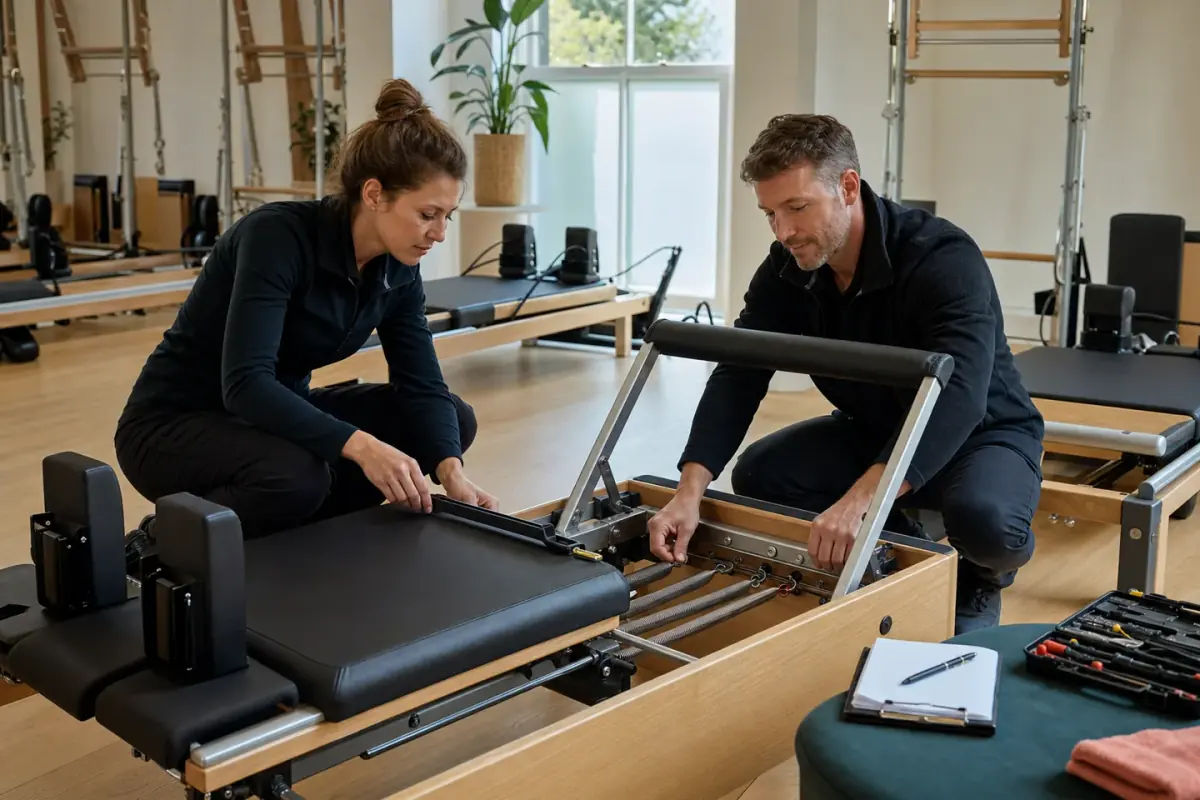
A second-hand reformer should be assessed as working equipment, not furniture. Before paying, identify the exact model and work out whether springs, wheels, ropes, upholstery and small hardware are still available.
Ask for these details before viewing
- brand, model, approximate year and serial number
- original owner''s manual and purchase record if available
- home or commercial use and typical weekly hours
- dates of spring, rope, wheel and upholstery replacement
- known faults, repairs, modifications and moves
- all accessories, pins, jumpboards, boxes and conversion parts included
Inspect the whole machine
Look along the frame and rails for distortion, impact damage and corrosion. Roll the carriage slowly through its full travel and listen for repeating bumps, grinding or scraping. Check wheels, ropes, straps, pulleys, clips, springs, footbar locks, headrest and shoulder rests.
Any kinked or separated spring, visible rope core, frayed load-bearing strap, missing retention part, insecure footbar or structural damage should be costed before the machine enters use.
Budget beyond the sale price
An inexpensive reformer may need a complete spring set, ropes, wheels and a professional inspection. Replacement parts are often model-specific. Confirm compatibility with the manufacturer or a brand-competent service engineer before assuming a similar-looking part will fit.
Balanced Body''s second-hand guidance recommends starting with new springs where history is unknown so their service life can be tracked. That is a useful risk-management principle even when the exact replacement requirement differs by brand.
Before clients use it
Clean the equipment using the manufacturer-approved products, replace unsafe consumables, assemble it to the current instructions and record a baseline inspection. Commercial studios should add it to the equipment register and risk-assessment process before the first class.
Manufacturer references
This article is general equipment-care information. Follow the current instructions for your exact brand and model, and remove equipment from use where safety is uncertain.