
Service knowledge for people who rely on their reformers.
Practical notes on maintenance, wear and common faults—researched against manufacturer guidance and written for owners, instructors and busy studios.
These guides support informed checks; they do not replace the current manual for your exact model or a competent inspection.
 Featured guideMaintenance
How often should a Pilates reformer be serviced?
There is no single interval for every machine. Build a sensible inspection and servicing rhythm around usage, environment and the manufacturer's instructions.
From the service notebook
Fault clues, maintenance decisions and ownership questions, explained without guesswork.

Why is my reformer carriage noisy or rough?
A new bump, squeak or grinding sound is useful evidence. Here is what to check safely before deciding whether the machine needs an engineer.
Fault guide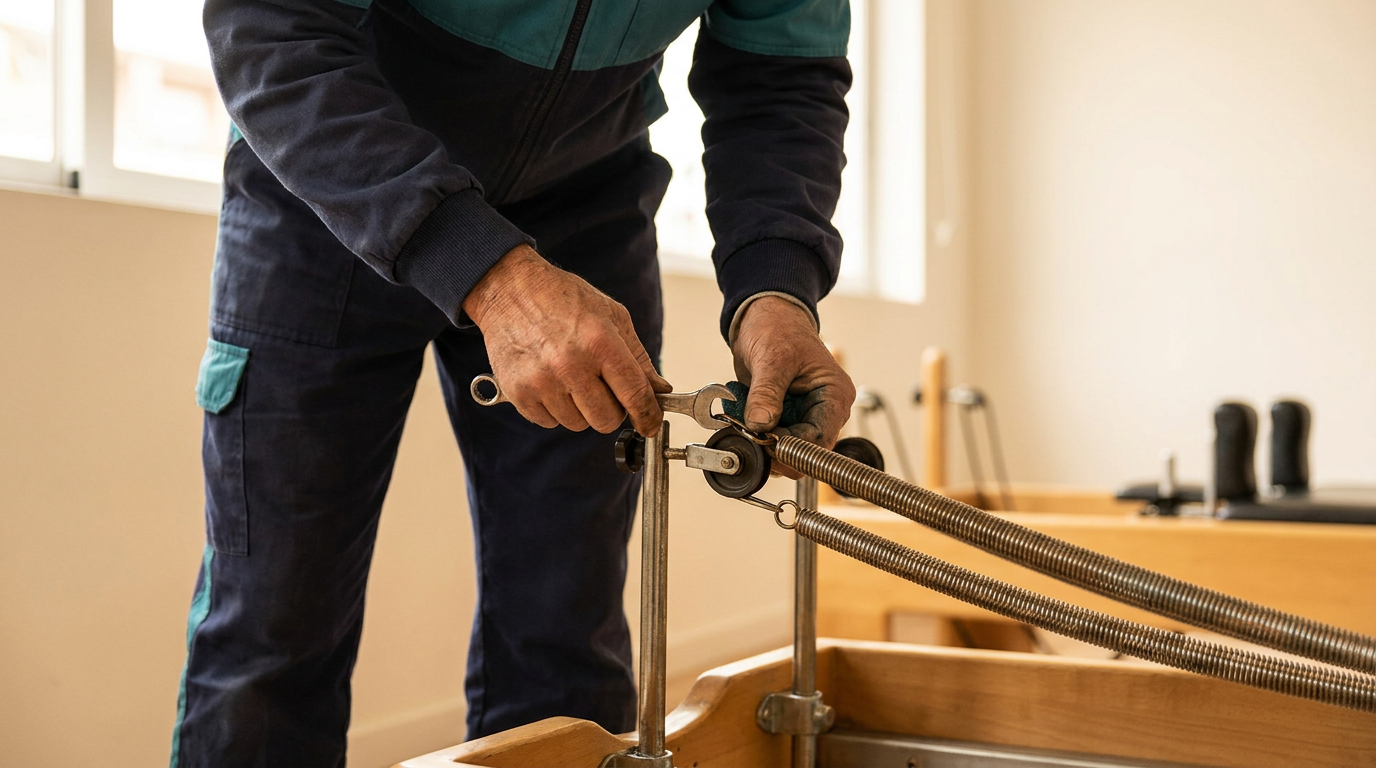
Reformer springs: the warning signs you should not ignore
Springs change gradually, so visual checks and replacement records matter. Learn the signs that mean a spring should come out of service.
Maintenance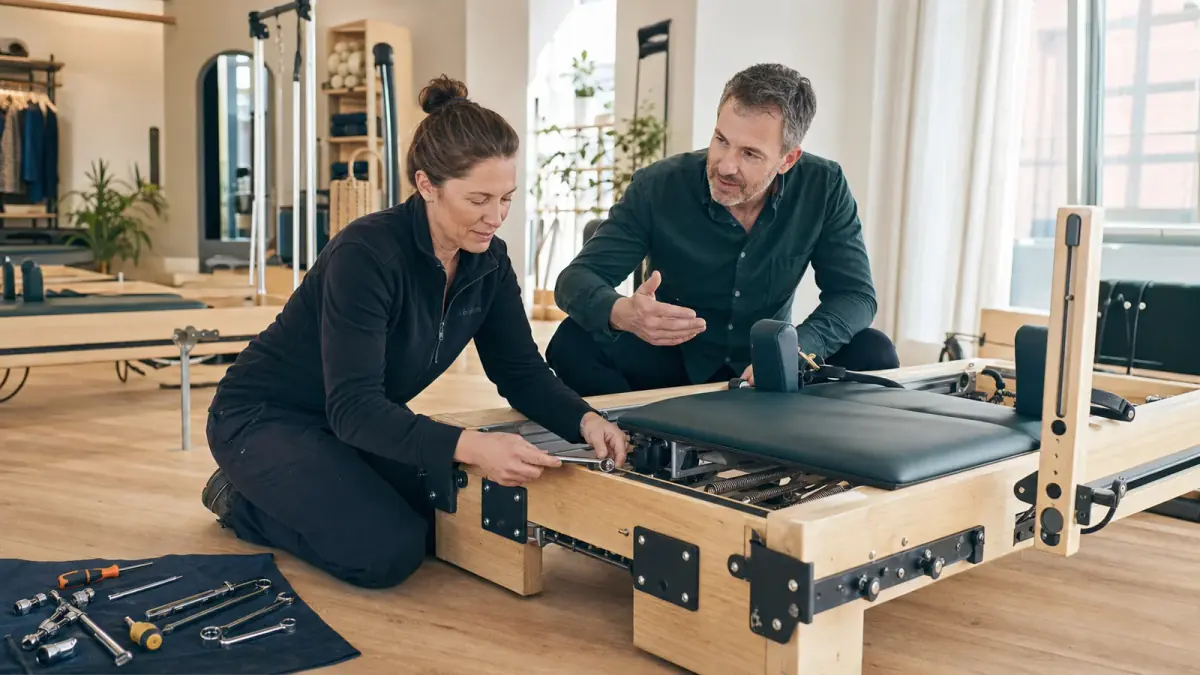
Frayed ropes, worn straps and tired clips: what is safe?
Ropes and straps wear fastest where they bend, run through pulleys and connect to clips. These are the areas an inspection should not miss.
Fault guide
A loose footbar is not just an annoying rattle
Movement at the footbar can come from a loose fixing, worn support or an incomplete lock. Treat a change in stability as a safety fault.
Fault guide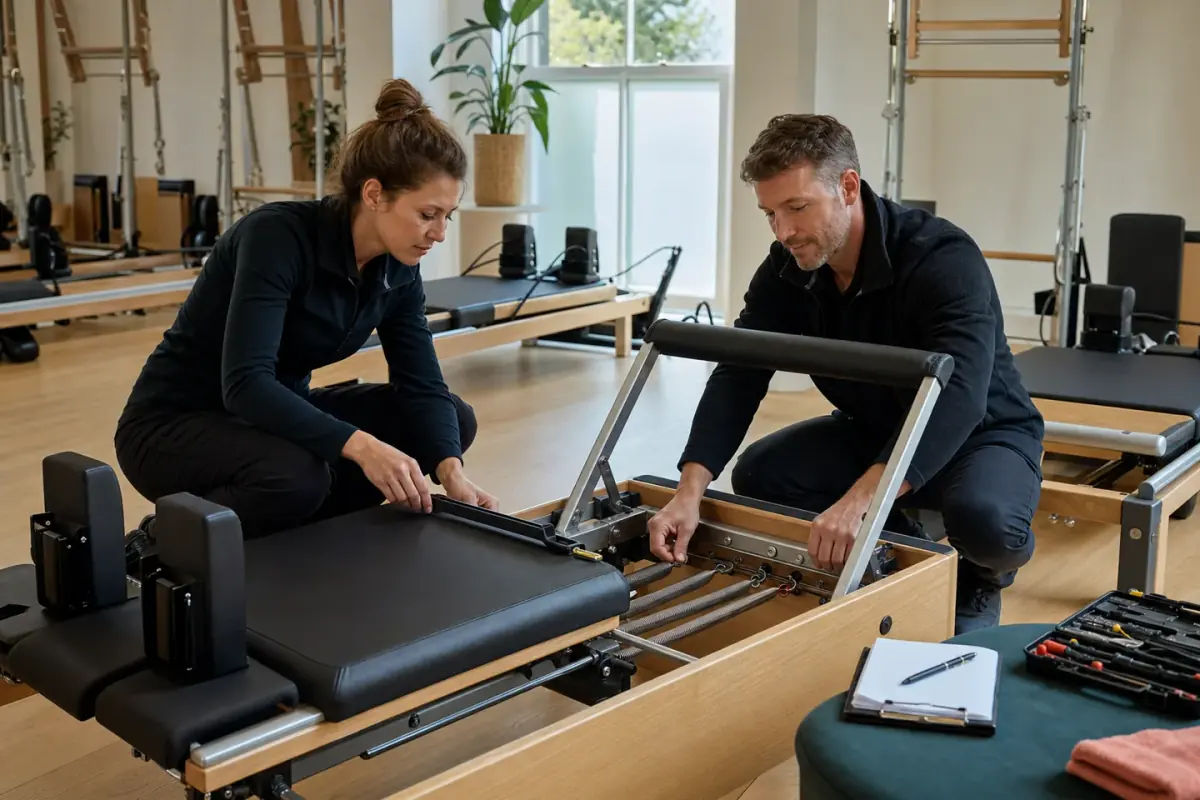
Buying a used Pilates reformer: a practical inspection list
A used reformer can be good value, but the purchase price is only part of the decision. Check safety, parts availability and service history first.
OwnershipA guide can narrow the question. A specialist can inspect the machine.
Tell us the make, model, symptoms and location. Photographs or a short video help us understand what support you need.