
Frayed ropes, worn straps and tired clips: what is safe?
Ropes and straps wear fastest where they bend, run through pulleys and connect to clips. These are the areas an inspection should not miss.
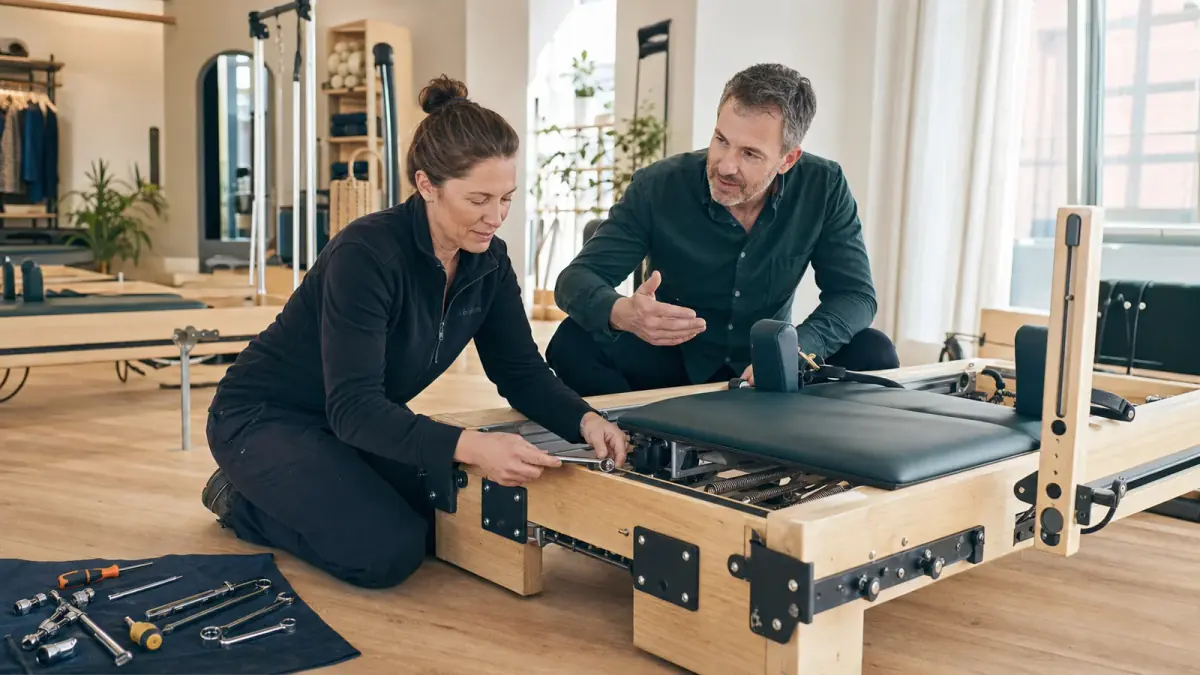
Rope and strap faults often begin in small, high-friction areas: beside a clip, through a pulley or where a strap folds under load. Inspect the full working length, not only the section that is easy to see.
What to look for
- outer rope fibres worn through so the inner core is visible
- flattening, glazing, hard spots or a sudden change in rope diameter
- fraying or torn stitching on loops and straps
- a clip that does not close fully or has a worn hook
- sharp pulley edges, poor alignment or a pulley that does not turn freely
- unequal rope lengths that return after correct adjustment
Balanced Body advises replacing rope when the core can be seen or the rope has flattened, and replacing straps when fraying appears. The attachment and pulley sections deserve particular attention.
Can I keep using it until the replacement arrives?
If the rope core is visible, stitching is failing, a clip does not close correctly or a load-bearing strap is frayed, take the reformer out of service. A temporary knot, taped section or substitute clip changes the load path and is not a repair.
Order parts against the exact brand, model and serial number. Merrithew, for example, states that its replacement parts are designed for its own equipment and will not fit other manufacturers'' machines.
Useful evidence for an engineer
Photograph both complete rope paths, each pulley, the rope ends and clips, plus the serial label. Note whether the reformer has a traditional or retractable rope system and whether the fault affects one side or both.
Manufacturer references
This article is general equipment-care information. Follow the current instructions for your exact brand and model, and remove equipment from use where safety is uncertain.