
A loose footbar is not just an annoying rattle
Movement at the footbar can come from a loose fixing, worn support or an incomplete lock. Treat a change in stability as a safety fault.
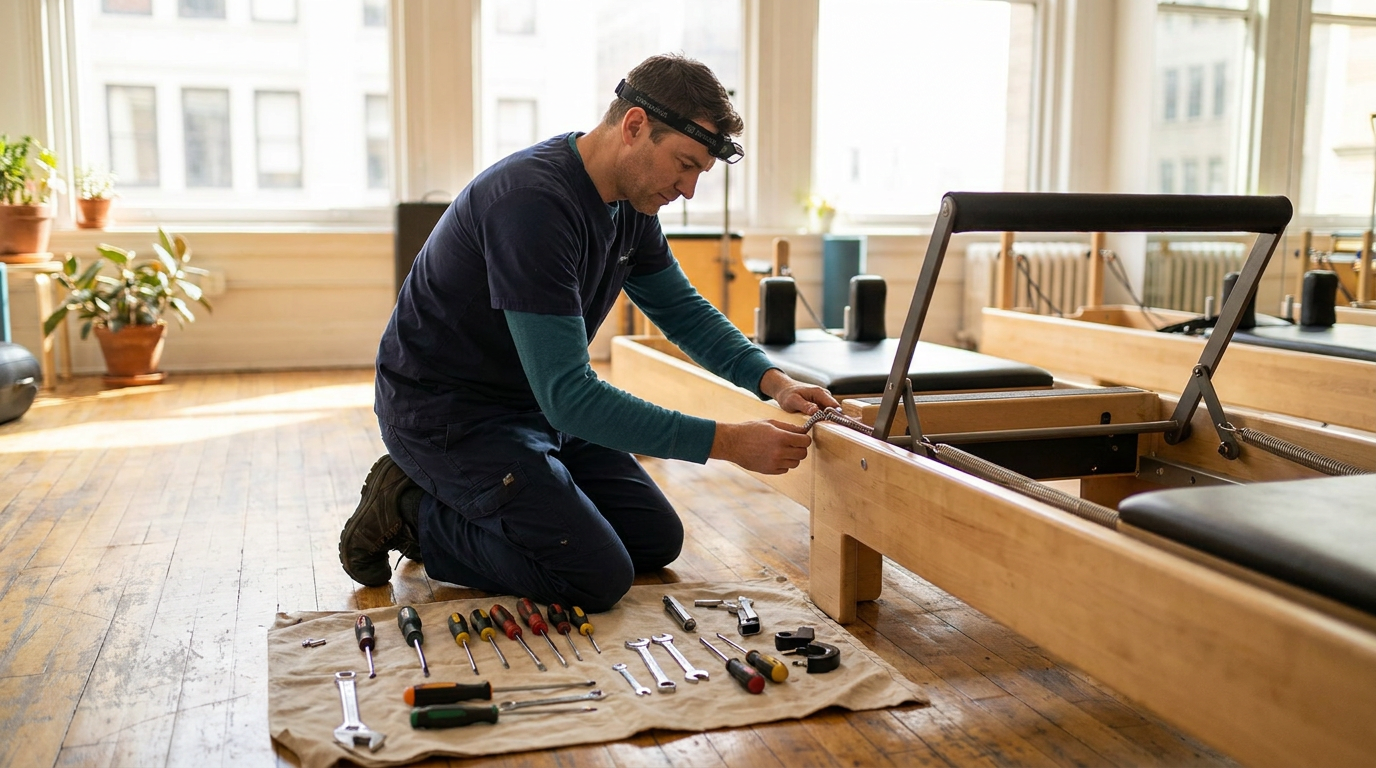
The footbar takes repeated, changing loads. If it begins to rock, click, slip between positions or feel different on one side, stop using the reformer until the cause is understood.
Check the symptom without exercising on it
With the machine out of use, confirm that the bar is in a manufacturer-approved position and that every locking pin or support is fully engaged. Compare both sides visually. Look for a missing pin, a fixing that has backed out, an elongated hole, a cracked support or a bumper that is no longer present.
Do not simply tighten every visible bolt as hard as possible. Some pivot fixings need to be secure while still allowing the support to rotate correctly. The required position and torque are model-specific.
Common fault areas
- locking pins or plungers not engaging completely
- loosened mounting hardware
- worn pivot points or support brackets
- damage after moving or stacking the equipment
- a footbar fitted in the wrong orientation or position
- missing bumpers, washers or retention parts
Balanced Body maintenance guidance calls for regular checks of footbar supports and monthly checks of footbar bolts on relevant models. Align-Pilates also includes attachment bolts and adjustable parts in its routine regime.
What to send with a repair request
Include the make, model and serial number; photographs of both footbar mounts; a close-up of the locking mechanism; and a short video showing the movement without a person standing on the bar. Mention whether the reformer has recently been moved, assembled or adjusted.
Manufacturer references
This article is general equipment-care information. Follow the current instructions for your exact brand and model, and remove equipment from use where safety is uncertain.